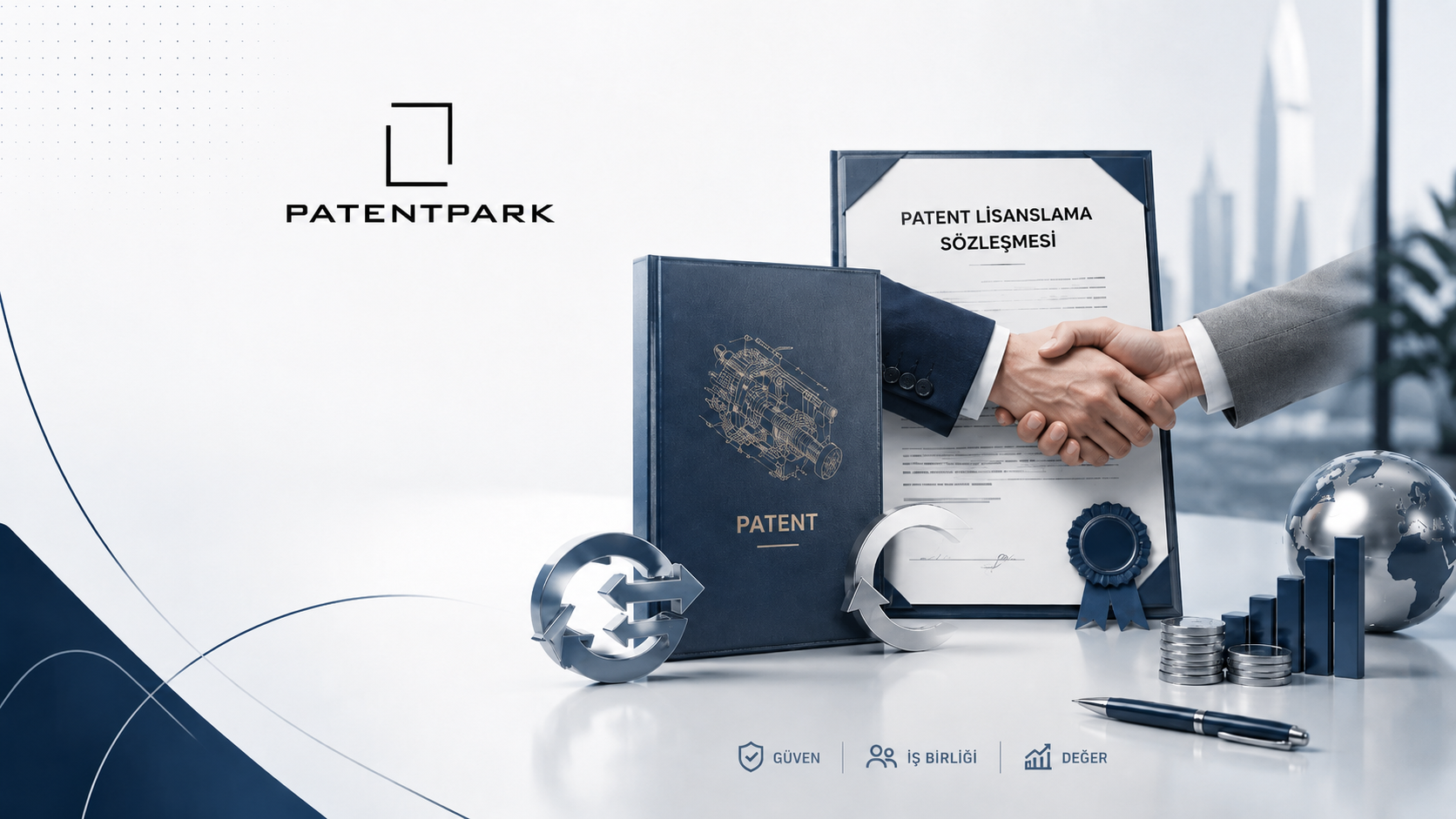
Patent licensing and assignment are key strategic tools that enable inventors and rights holders to commercially benefit from their intellectual property assets. Through these mechanisms, patents go beyond being legal protection documents and become active commercial assets that generate sustainable revenue, create competitive advantage and support corporate growth.
A patent license is a legal agreement that allows a third party to manufacture, use or sell an invention commercially under certain conditions within the scope of the patent rights owned by the inventor or patent holder.
In this agreement, the owner of the invention is referred to as the licensor, while the party receiving the rights is referred to as the licensee.
Licensing is an effective commercialization method that enables the patent owner to generate income from the commercial potential of the invention while maintaining ownership of the patent rights.
Licensing agreements may be structured in different ways depending on the needs and preferences of the parties.
An exclusive license grants the licensee the sole right to use the invention within a defined geographical territory or scope of use.
This structure provides the licensee with a strong competitive advantage and may create a basis for a higher license fee from the licensor’s perspective.
A non-exclusive license allows the same invention to be licensed to multiple licensees simultaneously.
This model provides the patent owner with broader market access and the opportunity to generate multiple revenue streams.
A sublicense allows the licensee to grant the licensed rights to third parties under certain conditions.
This structure is commonly preferred in multi-layered distribution, production and business partnership models.
Licensing agreements are structured according to payment models agreed upon by the parties.
These structures are generally based on two main models. In the first model, a fixed one-time payment is made for the license. In the second model, continuing payments, commonly referred to as royalties, are calculated in proportion to the revenue generated from the commercial use of the invention.
Hybrid payment structures, where these two models are applied together under specific conditions, are also commonly used in licensing practice.
Licensing agreements are comprehensive legal documents containing binding terms and conditions accepted by both parties.
These agreements generally include:
Preparing the agreement in a way that protects the interests of both parties in a balanced manner is essential for a long-term and sustainable business relationship.
Patent assignment, also referred to as patent sale, is a transaction through which the patent owner permanently transfers all rights in the patent to a third party.
Unlike licensing, once the assignment is completed, the former patent owner no longer retains any rights over the invention, unless otherwise agreed under specific contractual arrangements.
This model provides the patent owner with immediate and predictable income, while granting the buyer full and exclusive control over the invention.
Whether patent assignment is more advantageous than licensing should be evaluated according to the strategic importance of the patent, the remaining protection term, commercialization potential and the commercial objectives of the parties.
At Patentpark Consultancy, we provide professional support at every stage of patent licensing and assignment processes.
Within this scope, our services include:
With our experienced team, we support inventors, companies and technology owners in making the most effective commercial use of their patented inventions.
At Patentpark Consultancy, we approach patent licensing and assignment not merely as contractual transactions, but as strategic commercialization processes.
Our objective is to help patent owners transform their technical rights into measurable commercial value while ensuring that legal, financial and strategic risks are properly managed.
For professional support regarding patent licensing and assignment services, you may fill out the “Consult an Expert” form below or contact us directly at 0850 311 42 42.
OUR PATENT REGISTRATION SERVICES
 EN
 TR
